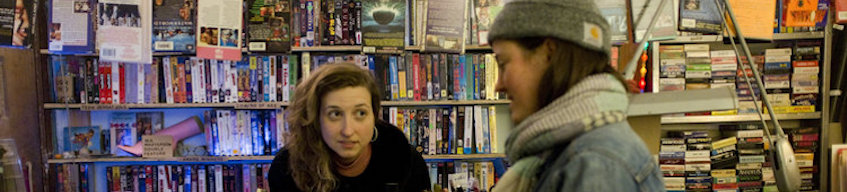
A few years back, Kendell Harbin amassed a rather large collection of tapes, almost inadvertently. With far more media than Kendell could ever watch alone, Kendell put everything into circulation and thought people might begin to classify the project as the work of an ‘archivist’ instead of a ‘hoarder’. It seemed the only logical way to do this involved turning a bedroom into a bootleg blockbuster. Kendell called it the Cry Now Free Video Library. Eventually, it became a place for historical wandering, identity exploration, and the scholarship of forgotten information. The correlation between 90’s queer history and home video production of that same period grew very apparent. What is video history without the format we have been trained to forget? What is queer history without the faces so often left off camera?
This entire project grew out of a hunch, where Kendell figured that taking the video collection on the road might magnetically attract other folks asking similar questions. Kendell followed this hunch and watched a question mark turn into a faux research center, that's now turning into an actual roaming center. The basic idea is to draw from both obscure and mainstream cinema to tease out the ways it has shaped, excluded, or erased contemporary queer history. Exploring this through screenings, lectures, and hands-on workshops, the aim is to assist small communities in the process of telling their own stories. Taking a wider view, Kendell's goal is to examine the role of archives, sharing economies, and self-made media in the larger project of raising awareness and social equity within remote LGBTQIA populations.